
On View May 12, 2026–Spring 2027
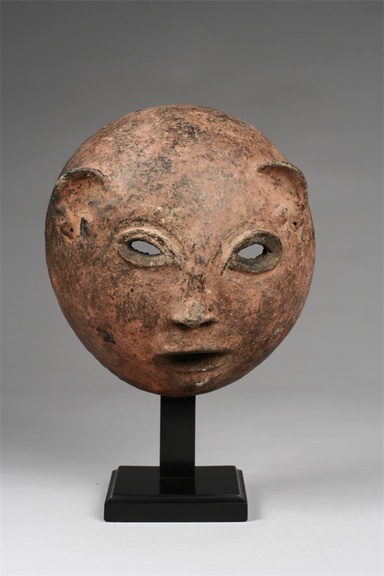
Curated by students enrolled in the Fall 2025 course MUSM/ARTH: 4081, “Curating African Art in America,” taught by Cory Gundlach at the University of Iowa.
For over a century, historical African art has served as a cornerstone of American museum collections, facilitating education, research, and community engagement. The impact of such collections is deeply rooted here at the University of Iowa, where an exhibition of African belongings inspired the introduction of the nation’s first PhD in African art history in 1957. While these collections remain common to the American cultural experience today, they continue to evoke a complex range of emotions—ranging from deep connection, comfort and joy, to grief, anger, and discomfort.
Dis/Comfort: Confronting Histories of African Art in the United States invites visitors to acknowledge diverse and complex emotional responses to African collections in US art museums, and to confront histories of ethical debate surrounding them.
This student-curated exhibition features select works from the Stanley Museum of Art’s African collection. Referred to as “belongings” rather than “objects,” they are presented through three thematic lenses—women’s agency, environment and spirituality, and the ethics of categorization. This shift in terminology emphasizes ownership history, particularly because the provenance for historical African collections often begins with individuals and locations outside of Africa.
Student Curators
Names are listed in relation to text panels coauthored by students for each thematic section of the exhibition.
| Categorization Ethics | Environment & Spirituality | Women’s Agency |
|---|---|---|
| Obatola Layiwola | Olivia Anders | Julie Brachmann |
| Ranee Taylor | Angelina Gentry | Cecil Campbell |
| Archie Wagner | Aly Hurley | Hannah Grillot |
| Lauren Woessner | Madalynn Vega | Maryellen Lerg |
Acknowledging Unrecorded Ownership Histories In Africa
This exhibition and the related course emphasize provenance, or ownership history for an artwork. In museum records, documented ownership histories usually include the names of dealers, collectors, and institutions in Europe and the United States who acquired belongings when or after they left Africa. The names of earlier owners within that continent, as well as artists’ names, are often absent. With support from the Andrew W. Mellon Foundation, the Stanley Museum of Art is conducting provenance research on its historical African collection to better understand the ownership histories of belongings within it, and its ethical status in relation to collecting practices during the colonial period (1884–1994).
Each label in this exhibition includes provenance information that represents a partial view of ownership history. A semicolon separating two names confirms that the work passed directly between two owners, while a period suggests that a direct transfer did not happen or is not known to have happened. Although many of the associated makers and owners within Africa remain unidentified, the Stanley Museum of Art acknowledges their central importance as the people who gave these belongings meaning.
This exhibition is generously supported by the Richard De Puma Teaching Exhibition Fund.