
Untitled work from the Maam Njaré series, 2020. Inkjet print on Hahnemühle paper, edition 1 of 7 + 2 artist proofs. 39 3/8 x 27 ½ inches. Stanley Museum of Art, museum purchase with support from International Programs and the Stanley-UI Foundation Support Organization, 2023.148. Ibrahima Thiam (Senegalese, 1976—)
On View August 22, 2026 – December 13, 2026
Ibrahima Thiam
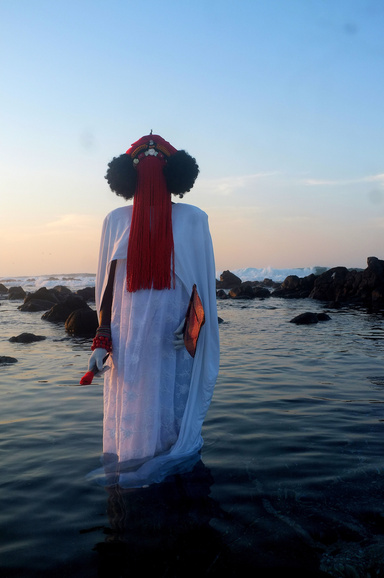
Maam Njaré, a Lebou deity, plays a role in several areas, ranging from spiritual beliefs to the practical management of natural resources. She is an invisible spirit, the protector of water sources. She plays a crucial role in purification ceremonies and serves as a symbol of identity for the Lebou people, a fishing community in Senegal.
This series revisits how beliefs are integrated into their daily lives and cultural practices. The medium of photography documents and bears witness to the richness of this oral and spiritual heritage. This series explores a new approach to representation in the history of photography. We encounter figures throughout this series, yet when they appear, they are hidden, invisible. By evoking the shimmering and transformative presence of these spirits, Thiam invites viewers to look and see beyond the lens. Thiam invites you, as the poet Birago Diop did before him in his poem “Souffles” (1960), to listen to things more often than to beings.
To achieve utopia in the present, to get out of a teleological view of history and open up new horizons.
En reconnaissance de la langue maternelle de l’artiste et des visiteurs du musée en provenance de pays francophones du monde entier, les textes explicatifs de cette exposition sont également présentés en français.
In recognition of the artist’s native/first language and museum visitors from Francophone countries around the world, didactics for this exhibition include text in French.