Iowa City, IA – On November 17, 2026, the Stanley Museum of Art will open the most wide-ranging, cross-disciplinary exhibition mounted in its new building since it opened in 2022. Plants and Power: Art’s Botanical Imagination aspires to bring the cultural lives of plants into fuller view. This expansive exhibition brings together more than 50 paintings, photographs, sculptures, decorative arts objects, and multimedia installations to examine how plant protagonists function as artistic subjects, materials, and methodologies.
“Plant blindness, the human tendency to be more dismissive of plants than other living organisms, extends to art-historical scholarship,” stated Diana Tuite, visiting senior curator of modern and contemporary art. “But when we refocus our attention on the ways makers have worked with plants and the artistry they use to accommodate them, we access so many other histories.”
Plants and Power applies a biocentric lens to the artworks on view to soften the boundaries that historians have drawn between nature and culture and expand our understanding of the many other-than-human species with whom we have co-evolved. Tuite curated the exhibition with input from advisor James Alfieri, assistant professor of instruction in the department of biology at the University of Iowa, as a way to recontextualize familiar Stanley Museum of Art holdings by individuals such as Grant Wood, Anna Atkins, and Robert Mapplethorpe.
“This show asks us to consider how an imitation Indigenous sculpture camouflaged by floral wallpaper, a nineteenth-century silver teapot, and a photograph recreating a bouquet from an international diplomatic event all express layers of relational power.”
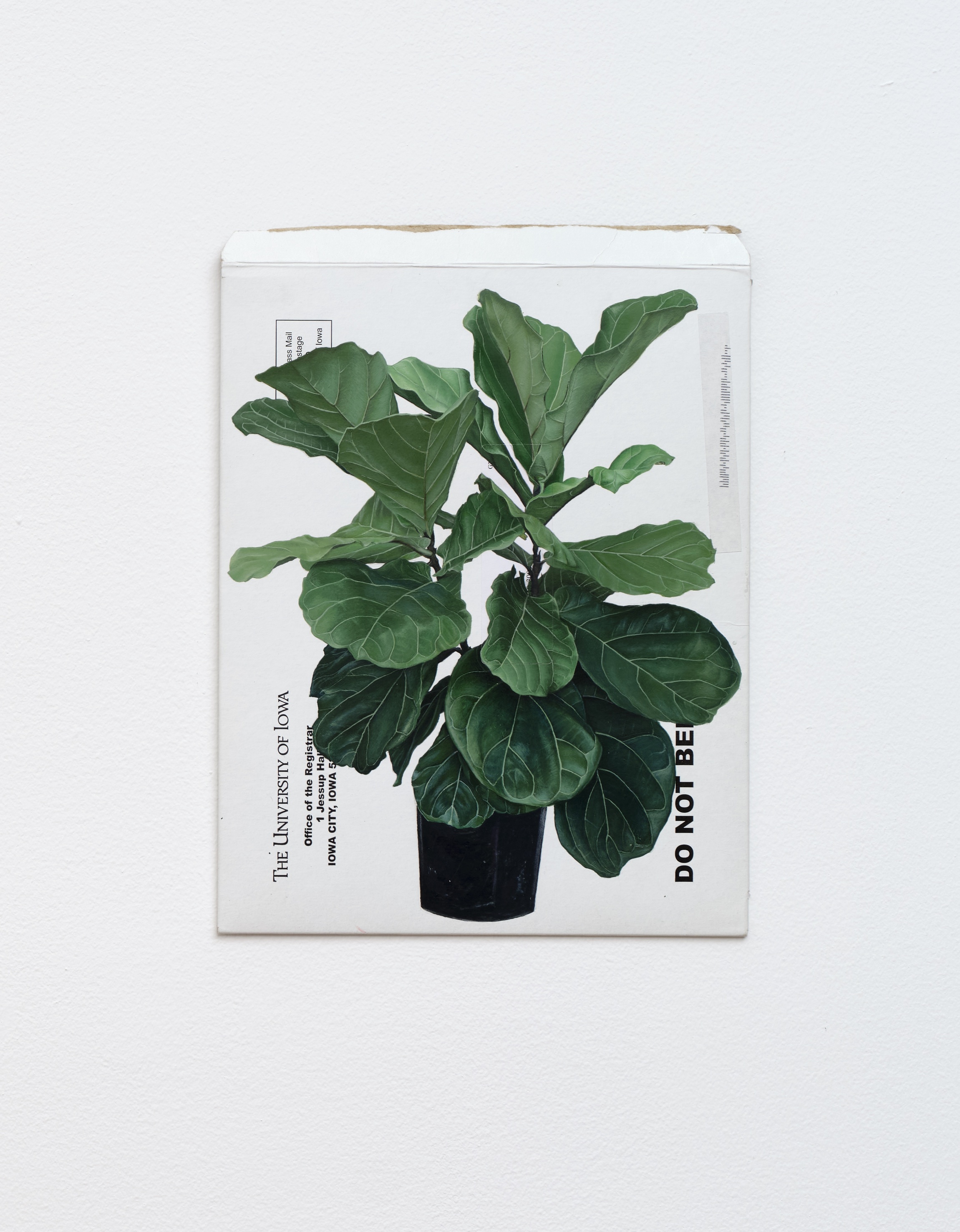
Among the objects on view are artworks acquired with the exhibition in mind, including works by renowned contemporary artists Fidencio Fifield-Perez, who received his MFA at the university; Duane Slick, who hails from Iowa; Pao Houa Her; and Joiri Minaya. Fifield-Perez’s dacaments 14, an acrylic painting of a fiddleleaf fig houseplant on a University of Iowa envelope, belongs to a series of works examining what the artist has called “the aesthetics of administration.”
“My admittance and attendance into the University of Iowa’s graduate Art Program coincided with my approval for Deferred Action for Childhood Arrivals (DACA),” remarked Fifield-Perez. “That the Stanley Museum of Art now holds the envelope which carried my MFA diploma upon graduating is symbolic and proof that I existed within the town and once called it home.”
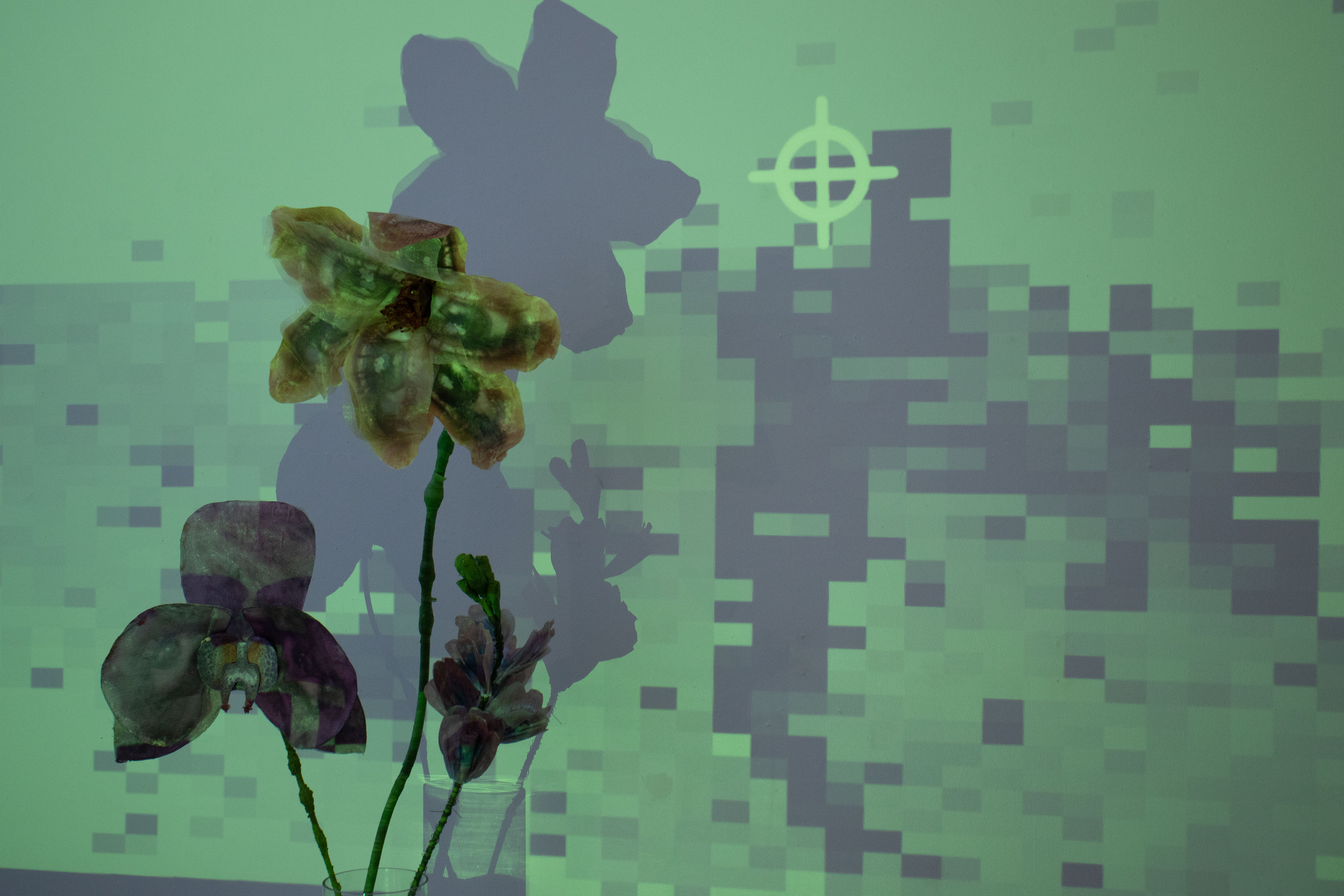
On view through May 23, 2027, Plants and Power will also introduce a selection of artworks on loan from public and private collections. Teresa Baker, Nicholas Galanin, Allison Janae Hamilton, Narsiso Martinez, and Taryn Simon are among the featured artists. A video installation created by Jo Longhurst, a British artist, will be shown for the first time in the United States. Longhurst uses bindweed, a climbing vine often classed as invasive, as a metaphorical structure for exploring issues of visibility, disability, and agency. Mahsa Fallah, who recently graduated with an MFA from the University of Iowa, will show an interactive installation developed in response to the murder of Mahsa Amini in Iran and the oppressive tactics employed by authoritarian regimes worldwide.
“Your Name Will Become a Code considers transformation as a form of resilience,” Fallah said. “A plant with strong roots does not die when its leaves are cut—it grows back stronger—just as the fragile bodies of protesters do.”
Plants and Power amplifies contemporary ecological issues and offers a platform for multidisciplinary engagement. Tuite and Alfieri have invited a cohort of individuals from across the university to contribute personal reflections to the exhibition. This initiative will broaden the museum’s circle of community stakeholders and strengthen infrastructure for future collaborations.
As Alfieri notes, “Collaborating with the Stanley Museum of Art has changed the way I think about teaching by connecting the science of the natural world with art, revealing how plants can unlock stories that might otherwise go unnoticed—an approach I hope will inspire both students and museum visitors to look at art and nature in new ways."
###
About the University of Iowa Stanley Museum of Art
The University of Iowa Stanley Museum of Art is a leading university art museum that serves as a focal point for members of the public as well as a multidisciplinary tool and creative hub for students across campus. The Stanley has one of the most important university-owned art collections in the country, including significant holdings of African art, 20th-century painting and sculpture, works on paper, textiles, and ceramics. Their world-class collection began with acquisitions made in the 1930s to support the nation’s first Master of Fine Arts program. The collection continued to evolve as generations of University of Iowa faculty and students, including Grant Wood, Elizabeth Catlett, Miriam Schapiro, Philip Guston, and Ana Mendieta, shaped the field of American art.